Is 130/85 High Blood Pressure? How to Read Your Numbers
 By Oleksandra Telehuzova, Chief Medical Officer, MD
Created: 15 Nov, 2026
Updated: 15 Nov, 2026
Read post: 06:47 min read
 25
 0
- What Do Your Blood Pressure Numbers Actually Mean?
- 130 - Systolic Blood Pressure
- 85 - Diastolic Blood Pressure
- Is 130/85 Considered High Blood Pressure?
- Why Is Slightly Elevated Blood Pressure Important?
- How to Measure Blood Pressure Correctly
- Can You Lower Blood Pressure Without Medication?
- How DeHealth Can Help You Take Control of Your Heart Health
- Understand What Your Numbers Mean
- Keep Your Cardiovascular Health Information Together
- Understand Your Laboratory Results
- Stay Consistent With Preventive Care
- Build Healthier Everyday Habits
- When Should You See a Doctor?
- The Bottom Line: Don’t Ignore Your Numbers. Understand Them.
- 💙 Make Your Next Health Decision an Informed One.
Your blood pressure may be telling you something important-even when you feel perfectly healthy.
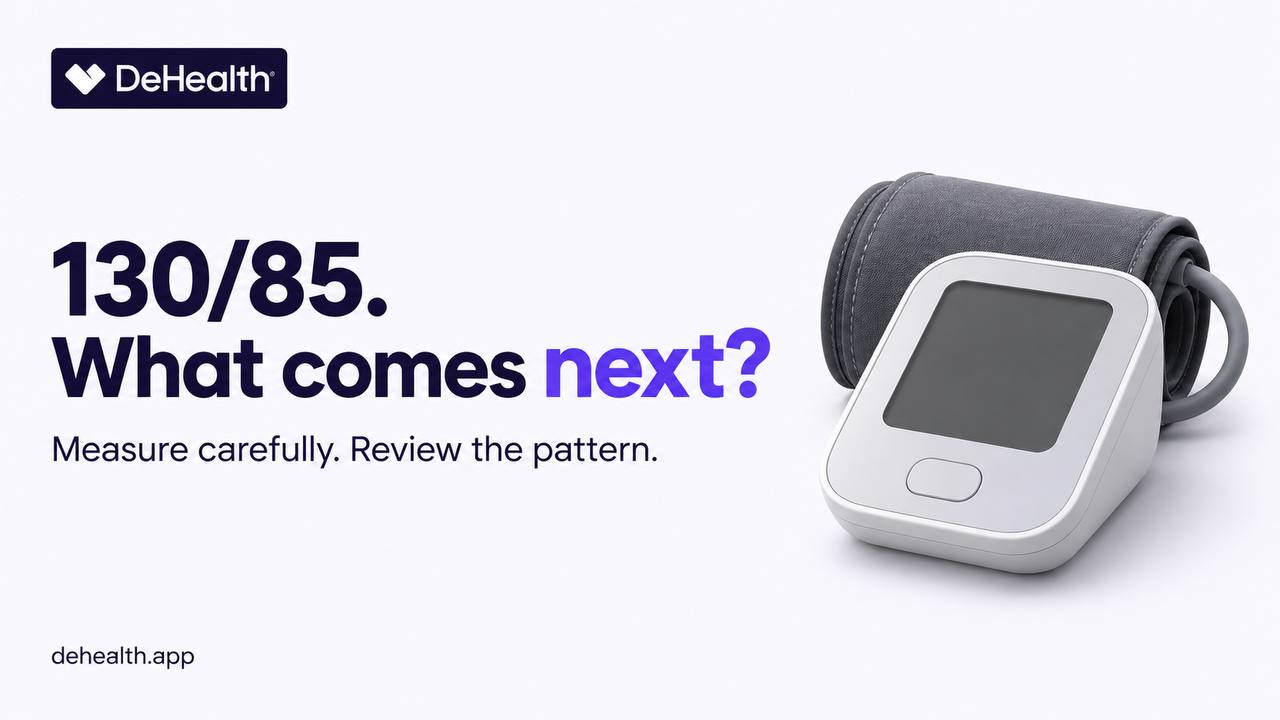
You check your blood pressure. The monitor shows 130/85 mmHg.
You feel fine. No headache, no dizziness, no discomfort.
So, is this normal? Should you be concerned? Do you need medication?
The answer is more nuanced than a simple yes or no.
A blood pressure of 130/85 is not an emergency, but if your readings are consistently at this level, they deserve attention.
And understanding what those two numbers mean is an important first step toward protecting your heart.
What Do Your Blood Pressure Numbers Actually Mean?
Every blood pressure measurement contains two numbers:
130 - Systolic Blood Pressure
The pressure inside your arteries when your heart contracts and pumps blood.
85 - Diastolic Blood Pressure
The pressure inside your arteries when your heart relaxes between beats.
Both numbers matter. Elevated systolic or diastolic pressure can increase cardiovascular risk over time.
But one measurement is only a snapshot. Your blood pressure changes throughout the day depending on physical activity, stress, sleep, caffeine, and even how you sit during the measurement.
Is 130/85 Considered High Blood Pressure?
Interestingly, American and European medical guidelines classify this reading differently.
According to the 2025 American Heart Association and American College of Cardiology guidelines:
| Blood pressure | Classification |
|---|---|
| Below 120/80 | Normal |
| 120–129 and below 80 | Elevated |
| 130–139 or 80–89 | Stage 1 hypertension |
| 140 or higher, or 90 or higher | Stage 2 hypertension |
Under these guidelines, a consistently measured blood pressure of 130/85 falls within Stage 1 hypertension.
According to the 2024 European Society of Cardiology guidelines:
- Below 120/70: Non-elevated office blood pressure.
- 120–139 systolic or 70–89 diastolic: Elevated office blood pressure.
- 140 systolic or 90 diastolic and above: Hypertension.
Therefore, 130/85 measured in a medical office is classified as elevated blood pressure in Europe, rather than hypertension.
Importantly, European guidelines use a lower diagnostic threshold for average blood pressure measured at home: 135 systolic or 85 diastolic. This means that repeated home readings averaging 130/85 may meet the European definition of hypertension based on the diastolic value.
These classifications do not mean that one measurement establishes a diagnosis. What matters is your average blood pressure, how it was measured, and your overall cardiovascular risk.
Why Is Slightly Elevated Blood Pressure Important?
Hypertension is often called a silent condition because many people have no symptoms.
You may feel completely healthy while consistently elevated blood pressure gradually affects your blood vessels.
Over time, uncontrolled hypertension increases the risk of:
- Heart attack and coronary artery disease.
- Stroke.
- Heart failure.
- Chronic kidney disease.
- Atrial fibrillation.
- Cognitive decline and vascular dementia.
The relationship between blood pressure and cardiovascular risk is continuous. There is no single number below which risk suddenly disappears.
However, a reading of 130/85 does not mean that cardiovascular damage has already occurred.
It is an opportunity to evaluate your risk and take preventive action.
How to Measure Blood Pressure Correctly
Before worrying about your numbers, make sure they are accurate.
Even small mistakes during measurement can significantly affect the result.
For reliable home measurements:
- Use a validated automatic upper-arm blood pressure monitor with the correct cuff size.
- Avoid caffeine, smoking, and exercise for at least 30 minutes beforehand.
- Sit quietly for five minutes before measuring.
- Keep your back supported, feet flat on the floor, and arm supported at heart level.
- Take two measurements, approximately one minute apart.
- Measure in the morning and evening for several days, ideally seven days when evaluating your usual blood pressure.
- Record your results and discuss the average with your healthcare professional.
Remember: One elevated reading does not diagnose hypertension. A consistent pattern matters much more.
Can You Lower Blood Pressure Without Medication?
For many people with mildly elevated blood pressure, healthy lifestyle changes are an essential first step.
- Reduce excess sodium. Eating fewer highly processed foods and limiting salt can help lower blood pressure.
- Move regularly. Aim for at least 150 minutes of moderate-intensity physical activity each week.
- Follow a heart-healthy diet. The DASH and Mediterranean dietary patterns emphasize vegetables, fruits, whole grains, legumes, and healthier fats.
- Maintain a healthy weight. Even modest weight reduction can improve blood pressure in people living with excess weight.
- Prioritize quality sleep. Poor sleep and untreated obstructive sleep apnea can contribute to hypertension.
- Limit alcohol and avoid smoking. Both are important for long-term cardiovascular health.
Whether medication is needed depends not only on your blood pressure but also on factors such as age, diabetes, kidney disease, previous cardiovascular events, and overall cardiovascular risk.
Never stop or modify prescribed blood pressure medication without consulting your clinician.
How DeHealth Can Help You Take Control of Your Heart Health
Most of us remember a blood pressure reading for a few minutes.
But do we remember what our blood pressure was six months ago? What our cholesterol level showed last year? Or when we last discussed cardiovascular prevention with a doctor?
Good prevention begins when scattered health information becomes meaningful knowledge.
This is where DeHealth can help.
Understand What Your Numbers Mean
With DeHealth’s Ask Me AI Health Assistant, you can explore questions about blood pressure, hypertension, and cardiovascular prevention in clear, understandable language.
For example:
- Is 130/85 considered elevated blood pressure?
- Why is my blood pressure higher in the morning?
- How do cholesterol and diabetes affect my cardiovascular risk?
- Which lifestyle changes can help support healthier blood pressure?
DeHealth helps you become more informed and prepared for conversations with your healthcare professional.
Keep Your Cardiovascular Health Information Together
With Global Health ID and Data Bank, DeHealth allows you to securely organize medical records, laboratory results, and relevant health documents.
You can keep your blood pressure monitoring reports alongside information about your cholesterol, glucose, kidney function, and medical history.
Having this information accessible makes it easier to share your health history with healthcare professionals.
Understand Your Laboratory Results
High blood pressure is only one part of cardiovascular risk.
Elevated LDL cholesterol, diabetes, and kidney disease can significantly influence your long-term cardiovascular health.
DeHealth’s AI-powered Reports helps explain laboratory results and visualize changes in relevant biomarkers over time.
Rather than looking at isolated laboratory numbers, you can develop a clearer understanding of your overall health information.
Stay Consistent With Preventive Care
With DeHealth’s Health Calendar, you can organize medical appointments, prescribed medication reminders, and follow-up assessments.
This can support continuity in your prevention plan, particularly when your healthcare professional recommends regular monitoring.
Build Healthier Everyday Habits
Through Insights and Workouts & Events, DeHealth provides health education and personalized wellness resources to support lifestyle improvements.
Physical activity, balanced nutrition, and consistent daily routines are not quick fixes. They are long-term investments in your cardiovascular health.
DeHealth can help you stay engaged with those goals.
DeHealth supports health education and preventive care. It does not replace a validated blood pressure monitor, establish a diagnosis of hypertension, or determine whether you need medication.
When Should You See a Doctor?
If your blood pressure repeatedly measures around 130/85, arrange a routine discussion with your healthcare professional to review your readings and individual cardiovascular risk.
Seek more prompt assessment if readings are consistently much higher, or if you have cardiovascular disease, diabetes, kidney disease, or other important risk factors.
If blood pressure is above 180/120 mmHg, repeat it after a brief rest and seek immediate medical advice if it remains that high. If severe blood pressure elevation is accompanied by chest pain, shortness of breath, neurological symptoms, or vision changes, call emergency services.
The Bottom Line: Don’t Ignore Your Numbers. Understand Them.
A blood pressure reading of 130/85 is not necessarily a reason to panic.
But it is a reason to pay attention.
Because cardiovascular prevention is not about waiting until your numbers become dangerously high.
It is about understanding your health, recognizing risk factors early, and making informed decisions before problems develop.
Your blood pressure is more than two numbers on a screen. It is one part of your cardiovascular health story.
💙 Make Your Next Health Decision an Informed One.
Don’t let your health information disappear into forgotten reports and medical folders.
Start with DeHealth today:
- Bring your medical information together.
- Understand your laboratory results.
- Explore your cardiovascular risk factors.
- Organize your preventive care.
- Take meaningful steps toward a healthier future.
Don’t wait for symptoms to tell you something is wrong. Start understanding your health today.
DeHealth - Making Prevention Personal.
Sources
Rank this post
Author:
Oleksandra Telehuzova
Chief Medical Officer, MD