Holiday Heart Syndrome: Why December Can Trigger Heart Rhythm Problems
 By Oleksandra Telehuzova, Chief Medical Officer, MD
Created: 19 Nov, 2026
Updated: 19 Nov, 2026
Read post: 10:00 min read
 5
 0
- 1. What Is Holiday Heart Syndrome?
- 2. What Does Science Tell Us?
- 3. Why Can December Be Particularly Challenging for Your Heart?
- Alcohol: The Most Established Trigger
- Sleep Deprivation: When Your Heart Loses Its Recovery Time
- Dehydration and Electrolyte Changes
- Holiday Stress
- Changes in Everyday Habits
- 4. What Are the Symptoms of Holiday Heart Syndrome?
- 5. Is Holiday Heart Syndrome Dangerous?
- 6. How to Protect Your Heart During the Holidays
- 7. How DeHealth Can Help You Protect Your Heart During the Holidays
- Understand Your Personal Cardiovascular Risk Factors
- Keep Your Heart Health History Organized
- Ask Questions About Heart Health
- Keep Your Prevention Routine on Track
- Support Heart-Healthy Habits
- 8. When Should You Seek Medical Attention?
- The Bottom Line: Celebrate the Holidays, Not Cardiovascular Risk
- Make Heart Health Part of Your Celebration
- More on heart health from DeHealth
One more glass of wine. One less hour of sleep. One more holiday party. Could your heart be paying the price?
December is supposed to be the most wonderful time of the year.
Christmas dinners, New Year’s celebrations, reunions with friends, festive drinks, and late nights. But while we’re enjoying the holiday season, our hearts may be dealing with an unexpected combination of physical and physiological stress.
Imagine waking up after a Christmas party with an unusually fast heartbeat.
Your chest feels strange. Your heart seems to skip beats. You feel slightly dizzy or short of breath.
You might blame the alcohol, lack of sleep, or too much excitement.
But these symptoms could indicate something more serious: Holiday Heart Syndrome.
And contrary to what the name suggests, it isn’t a harmless holiday inconvenience.
1. What Is Holiday Heart Syndrome?
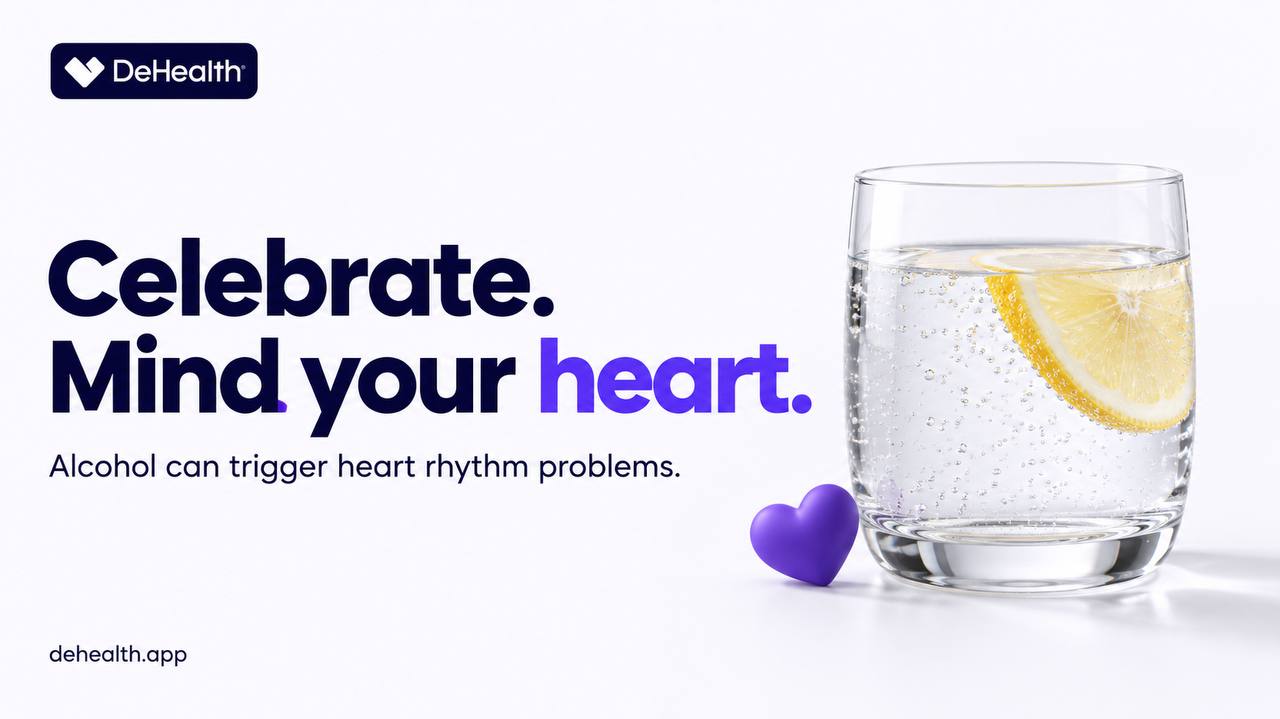
Holiday Heart Syndrome describes heart rhythm disturbances, particularly atrial fibrillation (AFib), occurring after episodes of excessive alcohol consumption.
The term was introduced in 1978, when physicians noticed that otherwise healthy people sometimes developed abnormal heart rhythms following weekends or holidays involving heavy drinking.
Atrial fibrillation occurs when electrical signals in the heart’s upper chambers become disorganized, producing an irregular and sometimes rapid heartbeat.
Instead of contracting in a coordinated rhythm, the atria beat chaotically.
This can reduce the efficiency of blood flow and increase the risk of blood clots and stroke.
Although the condition is strongly associated with excessive alcohol consumption, disrupted sleep, dehydration, and other physiological stressors may contribute to the circumstances in which arrhythmias occur.
The surprising part? Holiday Heart Syndrome can affect people who have never been diagnosed with heart disease.
2. What Does Science Tell Us?
Alcohol is not simply a lifestyle factor associated with cardiovascular disease. It can also act as an immediate trigger for atrial fibrillation in susceptible individuals.
A study published in Annals of Internal Medicine followed 100 people with previously diagnosed intermittent atrial fibrillation using continuous heart rhythm monitoring.
Researchers found that:
- One alcoholic drink was associated with approximately twice the odds of an atrial fibrillation episode within the following four hours.
- Two or more drinks were associated with more than 3.5 times the odds of an episode during the same period.
These findings demonstrate a short-term association between alcohol consumption and atrial fibrillation in people already living with the condition. They do not mean that one drink doubles everyone’s risk of developing AFib.
Another study, published in the European Heart Journal in 2024, monitored young adults following heavy alcohol consumption.
Among 193 participants, whose average age was approximately 30 years, 10 experienced clinically relevant arrhythmias, including atrial fibrillation or ventricular tachycardias, during monitoring.
Notably, these episodes occurred mainly during the recovery period after drinking.
Your heart may react to alcohol not only while you’re drinking, but also during the hours that follow.
3. Why Can December Be Particularly Challenging for Your Heart?
The calendar itself doesn’t cause arrhythmias.
It’s the combination of holiday behaviors, altered routines, and individual cardiovascular risk factors that can create conditions in which rhythm disturbances become more likely.
Alcohol: The Most Established Trigger
Alcohol can affect the electrical properties of cardiac cells, alter autonomic nervous system activity, and increase susceptibility to atrial fibrillation.
Heavy drinking may also contribute to dehydration and electrolyte disturbances, especially when associated with vomiting.
Importantly, even people who don’t drink regularly may experience arrhythmias after occasional heavy alcohol consumption.
Sleep Deprivation: When Your Heart Loses Its Recovery Time
Holiday celebrations often mean going to bed later and sleeping fewer hours.
Sleep disruption can influence autonomic nervous system regulation and may worsen arrhythmia susceptibility in some people.
Obstructive sleep apnea is another important risk factor associated with atrial fibrillation.
While one short night does not automatically cause an arrhythmia, protecting regular sleep is an important component of cardiovascular health.
Dehydration and Electrolyte Changes
Alcohol can increase urine production, and people may forget to drink enough water during celebrations.
Dehydration, especially when substantial, can be accompanied by disturbances in electrolytes such as potassium and magnesium.
These minerals are important for normal cardiac electrical activity.
However, palpitations after drinking should not automatically be attributed to dehydration. An abnormal heart rhythm may require medical evaluation.
Holiday Stress
December can involve family responsibilities, travel, financial pressures, deadlines, and emotional stress.
Stress activates the sympathetic nervous system, increasing heart rate and influencing cardiovascular physiology.
For people with an underlying susceptibility to arrhythmias, this may contribute to symptoms.
Changes in Everyday Habits
During the holidays, it’s easy to skip regular physical activity, change meal patterns, forget medication, or consume more alcohol than usual.
These changes can be particularly relevant for people with hypertension, diabetes, sleep apnea, or previously diagnosed atrial fibrillation.
4. What Are the Symptoms of Holiday Heart Syndrome?
Atrial fibrillation doesn’t always cause dramatic symptoms.
Some people experience an obvious racing heartbeat, while others notice only mild discomfort-or nothing at all.
Common warning signs include:
- Heart palpitations: A racing, fluttering, pounding, or irregular heartbeat.
- Shortness of breath: Particularly during physical activity or sometimes at rest.
- Dizziness or lightheadedness: Feeling unusually unsteady or faint.
- Unexplained weakness or fatigue: Especially when accompanied by palpitations.
- Chest discomfort: Pressure or an unusual sensation in the chest.
- Reduced exercise tolerance: Becoming breathless or tired during activities that are normally easy.
These symptoms are not specific to atrial fibrillation and can have several causes.
An electrocardiogram (ECG), sometimes combined with longer-term heart rhythm monitoring, is usually needed to identify the rhythm accurately.
Never assume a racing or irregular heartbeat is simply a hangover.
5. Is Holiday Heart Syndrome Dangerous?
Sometimes alcohol-associated atrial fibrillation stops spontaneously.
However, that doesn’t mean it should be ignored.
Even a first episode of atrial fibrillation deserves appropriate medical assessment.
Why?
Because atrial fibrillation can recur, even after the original trigger has disappeared.
And importantly, AFib increases the risk of ischemic stroke through the formation of blood clots in the heart.
The need for treatment, including medication to reduce stroke risk, depends on factors such as age, medical history, cardiovascular conditions, and overall stroke risk-not simply whether the episode stopped on its own.
The European Society of Cardiology emphasizes alcohol reduction as part of comprehensive atrial fibrillation management.
Its 2024 guidelines recommend limiting alcohol consumption to no more than 30 grams per week-approximately three European standard drinks-for people with AFib as a strategy to reduce recurrence.
For some individuals, particularly those with alcohol-triggered AFib, avoiding alcohol altogether may be appropriate.
6. How to Protect Your Heart During the Holidays
The good news is that enjoying the festive season and protecting your cardiovascular health are not mutually exclusive.
A few practical decisions can make a difference.
1. Avoid binge drinking.
The most effective way to reduce alcohol-related arrhythmia risk is to avoid excessive drinking. Consider alcohol-free alternatives, especially if you have previously experienced palpitations or AFib.
2. Stay hydrated.
Drink water regularly, particularly during long celebrations or travel. Remember that hydration does not cancel out alcohol’s direct effects on the heart.
3. Protect your sleep.
Try to maintain a consistent sleep schedule and give your body adequate time to recover.
4. Keep moving.
Walking, gentle exercise, and regular physical activity are beneficial for cardiovascular health. Avoid strenuous exercise if you’re experiencing unexplained palpitations or other concerning symptoms.
5. Manage your cardiovascular risk factors.
High blood pressure, obesity, diabetes, and sleep apnea can increase the likelihood of atrial fibrillation.
6. Don’t ignore unusual symptoms.
If you develop new or recurrent palpitations, especially with breathlessness or dizziness, seek medical evaluation rather than waiting until the holidays are over.
7. How DeHealth Can Help You Protect Your Heart During the Holidays
Preventive healthcare becomes more challenging when daily routines change.
Travel, celebrations, busy schedules, and competing responsibilities can make it easy to neglect medical appointments or lose track of important health information.
DeHealth helps you keep prevention part of your everyday life-even during the busiest season of the year.
Understand Your Personal Cardiovascular Risk Factors
Atrial fibrillation doesn’t occur in isolation.
Hypertension, diabetes, obesity, and other medical conditions may influence your cardiovascular health.
With DeHealth’s AI-powered Reports, you can explore laboratory results and understand measurements related to your cardiovascular and metabolic health.
For example, you can review explanations of glucose, cholesterol, kidney function, and other relevant laboratory measurements.
These results do not diagnose atrial fibrillation, but understanding your wider health profile can support preventive conversations with your doctor.
Keep Your Heart Health History Organized
Have you ever experienced palpitations and later struggled to remember when they happened or what your previous ECG showed?
With Global Health ID and Data Bank, DeHealth allows you to organize important medical information, including ECG reports, cardiology consultations, medical history, and prescribed treatments.
Keeping your records accessible can be especially valuable when visiting a new healthcare professional or receiving care while traveling.
Ask Questions About Heart Health
Not every unusual heartbeat is a sign of serious disease, but understanding possible symptoms and risk factors matters.
DeHealth’s Ask Me AI Health Assistant can help explain general cardiovascular health questions, such as:
- What is atrial fibrillation?
- How can alcohol affect heart rhythm?
- Why can sleep apnea increase cardiovascular risk?
- What are the main risk factors for heart rhythm disorders?
- What should I discuss with a cardiologist after experiencing palpitations?
DeHealth is an educational and preventive health tool. It cannot determine whether current palpitations are dangerous or replace an ECG or urgent medical assessment.
Keep Your Prevention Routine on Track
During December, it’s easy to forget a follow-up appointment or miss an important health task.
DeHealth’s Health Calendar can help organize medical appointments, health reminders, and prescribed medication schedules.
For people already managing cardiovascular conditions, consistent follow-up and adherence to prescribed treatment are particularly important.
Support Heart-Healthy Habits
Through Insights and Workouts & Events, DeHealth offers health education, personalized wellness resources, and physical activity guidance.
These tools can support healthier routines, including regular movement, better awareness of cardiovascular risk factors, and ongoing engagement with preventive care.
The goal isn’t to turn every celebration into a medical checklist.
It’s to make healthy decisions easier to maintain throughout the year.
8. When Should You Seek Medical Attention?
If you develop a new, sustained, or recurrent irregular heartbeat, arrange prompt medical evaluation, even if symptoms improve.
Call emergency services immediately if palpitations are accompanied by:
- Severe or persistent chest pain.
- Significant difficulty breathing.
- Fainting or loss of consciousness.
- Sudden weakness, facial drooping, speech difficulties, or other stroke symptoms.
- Severe dizziness or signs of cardiovascular instability.
Do not drive yourself to the hospital if you are experiencing potentially serious symptoms.
An app cannot diagnose a heart rhythm emergency, and seeking medical care should never be delayed while using one.
The Bottom Line: Celebrate the Holidays, Not Cardiovascular Risk
Holiday Heart Syndrome reminds us that cardiovascular health is influenced not only by long-term habits but also by short-term choices.
A single night of excessive drinking may trigger an abnormal heart rhythm in susceptible individuals.
And even people without previously diagnosed heart disease can experience alcohol-associated arrhythmias.
The solution isn’t to fear the festive season.
It’s to understand the risks, recognize warning signs, and make decisions that support your health.
Your heart doesn’t take a holiday. Your preventive care shouldn’t either.
Make Heart Health Part of Your Celebration
This December, give yourself something more meaningful than another New Year’s resolution.
Give yourself a better understanding of your health.
With DeHealth, you can keep your medical records together, explore your laboratory results, learn about cardiovascular prevention, and stay organized with your health goals.
Don’t wait for an unexpected heartbeat to remind you that your heart matters.
💙 Start taking a more informed approach to prevention with DeHealth today.
Discover DeHealth
DeHealth - Making Prevention Personal.
Medical disclaimer: This article provides general health information and is not a substitute for professional medical advice, diagnosis, or emergency treatment.
More on heart health from DeHealth
- Heart Health: A Complete Guide to Prevention
- Is 130/85 High Blood Pressure? What the Numbers Mean
- Heart Attack Symptoms in Women
- Preventive Health Check-ups by Age: 20s to 60s
Sources
- Marcus GM et al. Acute Consumption of Alcohol and Discrete Atrial Fibrillation Events. Annals of Internal Medicine (2021)
- Brunner S et al. Acute alcohol consumption and arrhythmias in young adults: the MunichBREW II study. European Heart Journal (2024)
- ESC. Atrial Fibrillation Guidelines (2024)
- DeHealth. Official product descriptions
- DeHealth. Plans
Rank this post
Author:
Oleksandra Telehuzova
Chief Medical Officer, MD